International Patients

Cancer immunotherapy in Japan,
designed around your tumor’s biology.

Dendritic cell vaccine therapy, combined with immune checkpoint inhibitors and local tumor-directed treatment — SynerTri Immunotherapy®.

For patients with advanced cancer seeking a second opinion or a personalized immunotherapy plan. We review your records free of charge and tell you in writing within 1–2 business days whether you can proceed with treatment in Japan — in English, Chinese, Korean, Vietnamese or Arabic.

01  Proven Experience

Long experience in dendritic cell vaccine therapy, now personalized to you.

What began with dendritic cell vaccine technology has grown into a broader precision immunotherapy platform, shaped around the unique biology of each patient's cancer. Each element is chosen with the aim of supporting an immune response against your cancer; whether and how much it helps differs from patient to patient.

Key facts (as of October 2026)
  • Precision Clinic Group is a medical corporation (Precision Medical Care) operating three clinics in Tokyo, Nagoya and Kobe, Japan, since 2005.
  • What we provide is dendritic cell (DC) vaccine therapy — including WT1-, tumor-associated-antigen- and neoantigen-based designs — combined with immune checkpoint inhibitors and local tumor-directed therapy (SynerTri Immunotherapy®). All of it is self-pay, alongside or after standard therapy.
  • Dendritic cell vaccine therapy since 2005. More than 6,500 treated cases across the group.
  • Initial inquiries are free, including our review of your records and our answer on whether you can proceed with treatment in Japan. Physician consultations, including second opinions, are fee-based, online or in person.
  • Treatment requires several short visits to Japan; most follow-up is by email. For neoantigen vaccines, analysis and manufacturing take about 2–3 months before the first dose.
Proven experience
6,500+cases treated

A clinical experience of more than 6,500 treated cases in dendritic cell vaccine therapy across the group.

Academic heritage
IMSUT · Osaka · Hokkaido

Built on technology developed at the Institute of Medical Science, The University of Tokyo (IMSUT), and advanced through the WT1 platform pioneered at Osaka University and Hokkaido University.

Early adoption
Early clinical implementation

Among the early medical institutions to bring WT1 dendritic cell vaccine therapy into clinical practice.

Paid feature — Custom Content from WSJ (The Wall Street Journal’s advertising department) · Next Era Leaders"Taking Personalized Oncology to the Wider World."
Publications, presentations, media and trademark
WSJ Custom ContentPaid feature, 2026 AACR Annual Meeting 2024Poster presentation (conference abstract) CureusPeer-reviewed case report, 2024 SynerTri®Registered trademark
02  A Legacy of Innovation

The foundation of WT1 dendritic cell therapy

Our clinical platform is rooted in advanced dendritic cell culture technology developed at the Institute of Medical Science, The University of Tokyo. By integrating the WT1 platform pioneered at Osaka University and Hokkaido University, we helped bring WT1 dendritic cell vaccine therapy into early clinical use.

Why experience matters

Precision Clinic Group carries forward decades of clinical and scientific development in cancer immunotherapy. With more than 6,500 treated cases, our platform has been shaped by long-term clinical practice and by care that keeps the patient at the center. The group was established in 2005 and was formerly known as Seren Clinic.

Beyond WT1: toward individualized precision oncology

Our platform has moved beyond shared antigens alone. WT1 remains an important component, but our strategy now also draws on tumor-associated antigens (TAAs), neoantigens and antigens derived from the patient's own tumor tissue, chosen according to the biology of each cancer.

The shift toward neoantigen-guided therapy

Using each patient's genomic information, we identify candidate neoantigen targets and, where appropriate, design a personalized neoantigen-based dendritic cell vaccine. This is what allows us to move toward a truly individualized form of precision immunotherapy.

03  What is SynerTri Immunotherapy?

An integrated precision strategy

SynerTri is not a single drug or procedure. It is our name for an individualized treatment approach that may combine dendritic cell vaccines, immune checkpoint inhibitors and treatment directed at the tumor. The combination depends on your diagnosis, previous treatment and overall health. The aim is to support an immune response against the cancer; a biological rationale or a case report does not establish that this combination improves outcomes for every cancer type.

ComponentRoleMechanism
01  Dendritic cell vaccine therapyThe Accelerator Trains the immune system to recognize the cancer Supports immune recognition of selected tumor antigens: tumor-associated antigens such as WT1, tumor-specific neoantigens, and antigens derived from your own tumor tissue.
02  Immune checkpoint inhibitorsThe Brake Release Releases the suppression that holds immunity back Targets immune suppression pathways such as PD-1, PD-L1 and CTLA-4 that tumors may use to evade immune responses.
03  Local tumor-directed therapyThe Switch Sends the signal that starts the response Uses radiation therapy, particle therapy, BNCT or cryotherapy to help stimulate the biological signals associated with anti-tumor immune activation.

Built for precision: data-driven design

We believe cancer treatment should be guided by the molecular and immunological characteristics of each patient's tumor. By integrating genomic analysis with immunotherapy and local treatment strategies, we aim to develop more individualized approaches to cancer care.

04  The Treatment Journey

Practical flow & planning

Our process is designed for precision at every step.

01
Consultation & planning

Tailoring the treatment strategy to your individual tumor profile.

02
Apheresis

Collecting immune cells from your blood for vaccine manufacturing.

03
Manufacturing & storage

Preparing your personalized dendritic cell vaccine in our cell processing facility.

04
Administration

Typically once every 1–3 weeks. Initial course: approximately 7 sessions over 4 months.

Neoantigen note

For neoantigen-based vaccines, genomic analysis and vaccine preparation generally require approximately 2–3 months before administration.

This option may be suitable if…

  • You have completed standard treatments but are still seeking additional possibilities.
  • You have tried multiple treatments with limited results.
  • You are exploring whether SynerTri Immunotherapy or other personalized treatment options may be appropriate for your case.
  • You wish to receive a treatment strategy guided by genomic information and the biology of your tumor.

Medical consultation process

  1. Contact our International Medical Department, or one of our partner agencies.
  2. Submit your medical records: medical history, blood test results, imaging (CT / MRI / PET-CT), genomic reports and similar.
  3. Schedule a fee-based second-opinion consultation with a physician, online or in person.
  4. Receive an individualized assessment of treatment options, feasibility, timing and personalized planning.
  5. If appropriate, we provide a personalized treatment plan and a detailed cost estimate before you travel to Japan.
  6. No treatment begins without your full understanding and consent.
  7. Once you decide to proceed, we help arrange your first visit to Japan.
  8. Some personalized treatments, including certain neoantigen-based approaches, require a preparation period before treatment begins.

Contact the International Medical Department

Your journey

Your journey from abroad

Treatment for patients from overseas follows the same course as for our Japanese patients. What differs is the planning around travel — and that is where our International Medical Department comes in.

01
Free records review

No travel needed. Send your medical history, blood tests, imaging and any genomic reports. We reply in writing within 1–2 business days (Japan time), in English, Chinese, Korean or Vietnamese, and tell you whether you can proceed with treatment in Japan.

02
Consultation and plan

A fee-based consultation with a physician, online or in person. You receive an individualized plan and a written cost estimate before you decide to travel.

03
First visit: a few days in Japan

Examinations and apheresis — the collection of immune cells from your blood, which takes about 3–4 hours. Most patients need only a few days for this visit.

04
Vaccine manufacturing: about 3 weeks

Your dendritic cell vaccine is prepared in our cell processing facility. You may return home or stay in Japan during this period.

05
Administration visits

The first course is about 7 doses over roughly 4 months, usually one dose every 1–3 weeks. Each injection takes about 10 minutes; a clinic visit is about one hour. Doses are given at our clinic, so we plan the schedule with you — a longer stay in Japan, or several shorter trips grouped around the doses.

06
Local therapy and other treatments

When radiation or other local therapy is part of your plan, it is carried out at partner facilities and scheduled around your visits.

07
Evaluation and follow-up

At the end of the first course we evaluate the response and discuss next steps. After you return home, we stay in contact and coordinate with your treating physician.

05  From Pioneer Research to Precision Platform

We welcome patients from around the world

Precision Clinic Group has taken part in the clinical evolution of WT1 dendritic cell vaccine therapy. Today that experience continues through SynerTri Immunotherapy, an integrated precision platform that incorporates neoantigen-guided strategies and personalized, immune-based approaches.

  • Early clinical implementation of WT1 dendritic cell vaccine therapy
  • Academic foundation involving IMSUT, Osaka University and Hokkaido University
  • More than 6,500 treated cases across Tokyo, Nagoya and Kobe
  • Continued evolution toward neoantigen-guided precision immunotherapy

Why choose us

A recognized clinical foundation in dendritic cell vaccine therapy. Built on long-standing experience in precision immunotherapy and individualized cancer care.

Dedicated international support. Our International Medical Department supports you at every step:

  • Interpreters in English, Chinese, Korean and Vietnamese, for consultations and treatment visits.
  • Accommodation — we help you find and book lodging near the clinic.
  • Visa documents — we prepare the medical documents required for your visa application.
  • Travel and access — guidance from the airport to each clinic, and coordination with our partner agencies where you have one.
  • A written cost estimate before you travel, so there are no surprises.
  • One point of contact throughout, from your first email to your return home.

Patient-centered communication. Clear explanations and recommendations tailored to your condition and your goals. Facing cancer in an unfamiliar healthcare system is hard enough; we work to remove the barriers of language, procedure and culture so that you can focus on your treatment.

From the Director

A message from the Director

Thank you for taking the time to read about us. If you are here, you or someone you love is probably facing advanced cancer, and perhaps considering treatment far from home. I understand how much courage that takes.

For more than twenty years, my work has centered on one question: how to help a patient's own immune system recognize and attack their cancer. That work began with dendritic cell vaccine therapy — technology my company developed and provided to medical institutions across Japan — and continues today at Precision Clinic Group, where we have cared for more than 6,500 cases across our three clinics.

What those years have taught me is that advanced cancer is not one disease, and it deserves more than one answer. We begin with the biology of your tumor, and we design the combination that fits it. We have published this clinical experience in peer-reviewed journals and presented it at the American Association for Cancer Research.

I cannot promise you an outcome — no physician honestly can. What I can promise is this: your records will be read carefully by me and my colleagues, free of charge, before anything else; you will receive a clear plan and a written estimate before you travel; and if you come to Japan, you will be welcomed and accompanied at every step. Please feel free to write to us in your own language, with any question at all.

Yuichiro Yazaki, MD
Director, Precision Clinic Tokyo · Representative, Precision Clinic Group

06  Your physician

The physician who leads your care

Care for patients from abroad is led personally by Dr. Yuichiro Yazaki, Director of Precision Clinic Tokyo and founder of the company that brought dendritic cell vaccine therapy into clinical practice in Japan and took it public in 2009. He is supported by the group’s team of 13 physicians in Tokyo, Nagoya and Kobe — medical oncology, surgery, hematology and radiation oncology — so that your plan is reviewed across specialties.
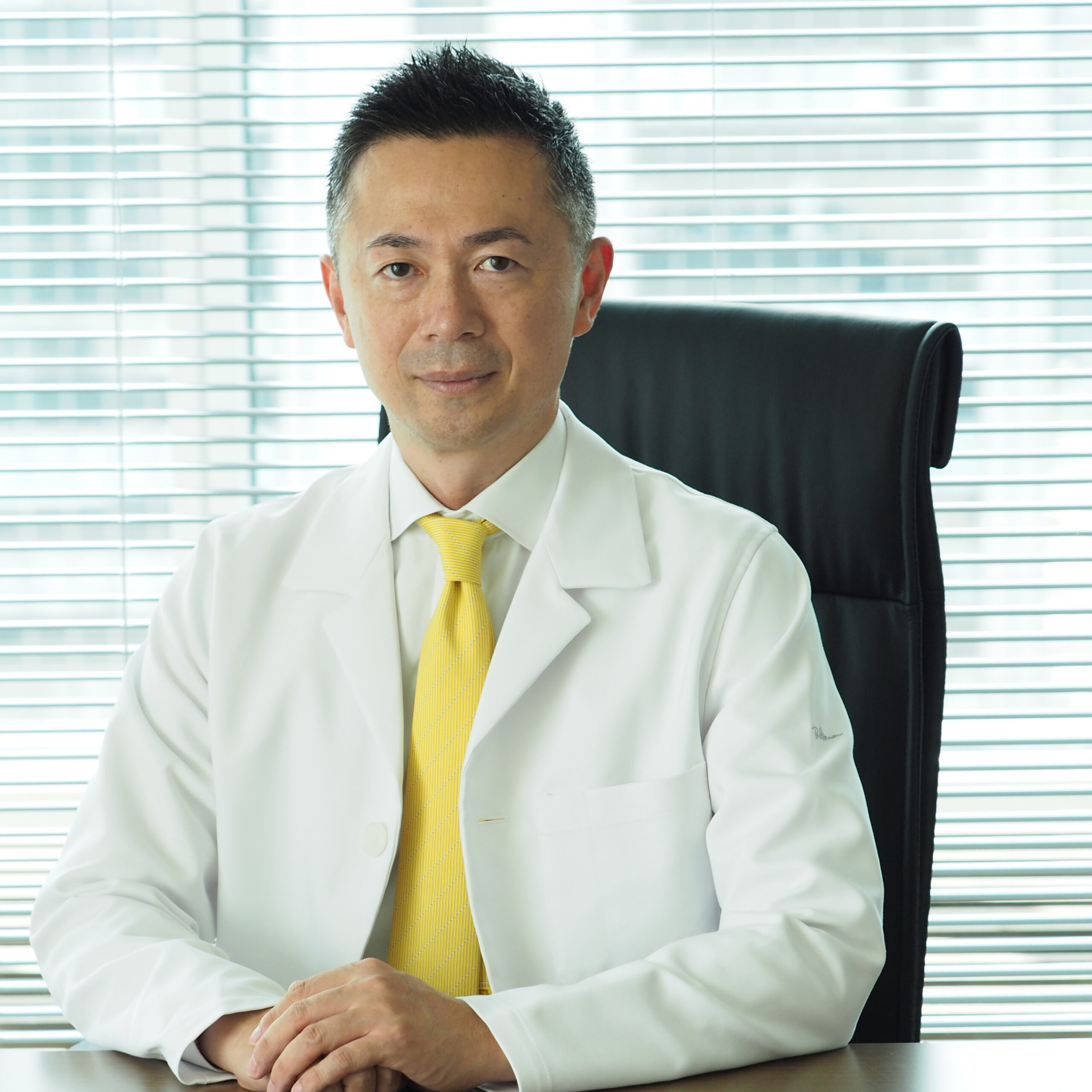
Yuichiro Yazaki
Director · Founder of Tella, Inc., taken public on JASDAQ in 2009 · Developer of dendritic cell vaccine therapy
Yuichiro Yazaki, MD矢﨑 雄一郎
Director, Precision Clinic Tokyo; Representative, Precision Clinic Group; gastrointestinal surgeon

Dr. Yazaki trained as a gastrointestinal surgeon at Tokai University Hospital from 1996. In 2000 he moved from the operating room to genomics at HuBit Genomics, Inc., and in 2003 joined the Division of Cell Processing at The Institute of Medical Science, The University of Tokyo (IMSUT) as a researcher — the institute whose dendritic cell culture technology he would later bring to patients.

In June 2004 he founded Tella, Inc. in Tokyo to develop dendritic cell vaccine therapy and bring it into clinical practice, and led the company as President & CEO, taking it public on the JASDAQ NEO market of the Osaka Securities Exchange in October 2009 — five years after its founding. Tella began providing its technology and know-how to medical institutions in 2005; in 2007 it supported the founding of Seren Clinic Tokyo — the predecessor of Precision Clinic Group — as its first core partner clinic, and secured an exclusive license to use the WT1 cancer-antigen peptide in dendritic cell vaccines. By March 2018 its partner institutions — university hospitals, national hospitals and cancer clinics across Japan — had performed about 11,670 cases of dendritic cell vaccine therapy with Tella’s technology (Tella, Inc. annual securities report, 2018). Through its subsidiary Tella Pharma, Inc., he also supported an investigator-initiated clinical trial of a WT1 dendritic cell vaccine for pancreatic cancer at Wakayama Medical University, in which the first patient was treated in 2017.

Today he leads Precision Clinic Group’s three clinics in Tokyo, Nagoya and Kobe, where more than 6,500 cases of dendritic cell vaccine therapy have been treated, and he designs each patient’s SynerTri Immunotherapy® plan himself. His clinical work has been presented at the AACR Annual Meeting 2024 and published in Cureus (2024) and Tan to Sui (2023), and in 2026 he was featured in Next Era Leaders, paid Custom Content from The Wall Street Journal’s advertising department.

1996
Tokai University Hospital — gastrointestinal surgery
2000
HuBit Genomics, Inc.
2003
Researcher, Division of Cell Processing, The Institute of Medical Science, The University of Tokyo
2004
Founded Tella, Inc. (Tokyo) — President & CEO. Research and development of dendritic cell vaccine therapy and its provision to medical institutions
2005
Tella begins providing dendritic cell vaccine technology and know-how to medical institutions
2007
Seren Clinic Tokyo (predecessor of Precision Clinic Group) opens as Tella’s first core partner clinic; dendritic cell vaccine therapy begins at the clinic. Exclusive license to the WT1 peptide for dendritic cell vaccines
2009
Takes Tella, Inc. public — initial public offering on JASDAQ NEO, Osaka Securities Exchange (October 2009), five years after founding
2010
Director, Advanced Medical Care, Inc.
2014
President, Tella Pharma, Inc.; President, GenoCypher, Inc. (now Allgene, Inc.)
2017
Investigator-initiated trial of a WT1 dendritic cell vaccine for pancreatic cancer begins at Wakayama Medical University; Tella Pharma supplies the investigational product. First patient treated in May 2017
2018
About 11,670 cumulative cases of dendritic cell vaccine therapy at Tella’s partner institutions (annual securities report, March 2018)
2023–2024
Publications and presentations with Precision Clinic Group: Tan to Sui (2023), AACR Annual Meeting 2024, Cureus (2024)
2026
SynerTri Immunotherapy® registered as a trademark; featured in Next Era Leaders (paid Custom Content from WSJ)
Present
Director, Precision Clinic Tokyo; Representative, Precision Clinic Group (Tokyo · Nagoya · Kobe)

Selected publications: Cureus, 2024 — combination cancer immunotherapy for inoperable stage IV hypopharyngeal carcinoma (case report, Precision Clinic Group) · Publications of the group and its predecessors (Tella / Seren Clinic)

07  Publications

Publications and related research

Primary sources related to our treatment approach: our own publications, and peer-reviewed research by other institutions on related antigens, cell-manufacturing methods and immune mechanisms. Listed as citations with links to the original articles.

Publications by Precision Clinic Group (12)

Papers and presentations authored or co-authored by physicians of our group, including its predecessor clinics (Seren Clinic). Only items verified against PubMed, the publisher or the original document are listed.

  1. Case report2024
    Complete Cure of Inoperable Stage IV Locally Advanced Hypopharyngeal Squamous Cell Carcinoma by an Innovative Combination Cancer Immunotherapy Consisting of Radiation, Immune Checkpoint Inhibitors, and Dendritic Cell Vaccine
    Iwasaki T, Yazaki Y, Myojo T, Masuko T, Nishimura T. Cureus. 2024;16(9):e69429. DOI: 10.7759/cureus.69429 · PMID 39411614 · PMCID PMC11474011.
  2. Conference presentation2024
    Helper/killer hybrid epitope long peptide (H/K-HELP) cancer vaccine augments Th1-dependent CTL induction at tumor-draining lymph node to eradicate solid tumor: its application to develop an innovative combination cancer immunotherapy (iCCI)
    Iwasaki T, Yazaki Y, Masuko T, Nishimura T. Cancer Research. 2024;84(6_Supplement):Abstract 3741. DOI: 10.1158/1538-7445.AM2024-3741. AACR Annual Meeting 2024, San Diego, USA. Poster #3741 (conference abstract; not a peer-reviewed article).
  3. Review2023
    Is the Abscopal Effect Obtained in Pancreatic and Biliary Tract Tumors?
    Shibamoto Y, Yazaki Y, Niwa M. Tan to Sui (The Biliary Tract & Pancreas). 2023;44(4):349–352. In Japanese.
  4. Clinical study2019
    Predicted Markers of Overall Survival in Pancreatic Cancer Patients Receiving Dendritic Cell Vaccinations Targeting WT1
    Ito Z, Kan S, Bito T, Horiuchi S, Akasu T, Yoshida S, Kajihara M, Hokari A, Saruta M, Yoshida N, Kobayashi M, Ohkusa T, Shimodaira S, Okamoto M, Sugiyama H, Koido S. Oncology. 2019;97(3):135–148. DOI: 10.1159/000500359 · PMID 31216557.
  5. Clinical study2018
    An Exploratory Study on the Anti-inflammatory Effects of Fucoidan in Relation to Quality of Life in Advanced Cancer Patients
    Takahashi H, Kawaguchi M, Kitamura K, Narumiya S, Kawamura M, Tengan I, Nishimoto S, Hanamure Y, Majima Y, Tsubura S, Teruya K, Shirahata S. Integrative cancer therapies. 2018;17(2):282–291. DOI: 10.1177/1534735417692097 · PMID 28627320 · PMCID PMC6041928.
  6. Clinical study2016
    Lung adenocarcinoma may be a more susceptive subtype to a dendritic cell-based cancer vaccine than other subtypes of non-small cell lung cancers: a multicenter retrospective analysis
    Takahashi H, Shimodaira S, Ogasawara M, Ota S, Kobayashi M, Abe H, Morita Y, Nagai K, Tsujitani S, Okamoto M, Suzuki Y, Nakanishi Y, Yonemitsu Y, DC Vaccine Study Group at the Japanese Society of Immunotherapy and Cell Therapy. Cancer Immunology, Immunotherapy. 2016;65(9):1099–1111. DOI: 10.1007/s00262-016-1872-z · PMID 27448677 · PMCID PMC11029687.
  7. Clinical study2014
    Prognostic factors related to add-on dendritic cell vaccines on patients with inoperable pancreatic cancer receiving chemotherapy: a multicenter analysis
    Kobayashi M, Shimodaira S, Nagai K, Ogasawara M, Takahashi H, Abe H, Tanii M, Okamoto M, Tsujitani S, Yusa S, Ishidao T, Kishimoto J, Shibamoto Y, Nagaya M, Yonemitsu Y, DC Vaccine Study Group at the Japan Society of Innovative Cell Therapy (J-SICT). Cancer Immunology, Immunotherapy. 2014;63(8):797–806. DOI: 10.1007/s00262-014-1554-7 · PMID 24777613 · PMCID PMC11028555.
  8. Case report2014
    Therapeutic effect of intratumoral injections of dendritic cells for locally recurrent gastric cancer: a case report
    Kobayashi M, Sakabe T, Chiba A, Nakajima A, Okamoto M, Shimodaira S, Yonemitsu Y, Shibamoto Y, Suzuki N, Nagaya M, DC-vaccine study group at the Japan Society of Innovative Cell Therapy (J-SICT). World Journal of Surgical Oncology. 2014;12:390. DOI: 10.1186/1477-7819-12-390 · PMID 25526950 · PMCID PMC4320508.
  9. Retrospective study2014
    The feasibility and clinical effects of dendritic cell-based immunotherapy targeting synthesized peptides for recurrent ovarian cancer
    Kobayashi M, Chiba A, Izawa H, Yanagida E, Okamoto M, Shimodaira S, Yonemitsu Y, Shibamoto Y, Suzuki N, Nagaya M, DC-vaccine study group at the Japan Society of Innovative Cell Therapy (J-SICT). Journal of Ovarian Research. 2014;7:48. DOI: 10.1186/1757-2215-7-48 · PMID 25298213 · PMCID PMC4108140.
  10. Clinical study2013
    Impact of dendritic cell vaccines pulsed with Wilms' tumour-1 peptide antigen on the survival of patients with advanced non-small cell lung cancers
    Takahashi H, Okamoto M, Shimodaira S, Tsujitani S, Nagaya M, Ishidao T, Kishimoto J, Yonemitsu Y, DC-vaccine study group at the Japan Society of Innovative Cell Therapy (J-SICT). European Journal of Cancer. 2013;49(4):852–859. DOI: 10.1016/j.ejca.2012.11.005 · PMID 23245331.
  11. Retrospective study2013
    Dendritic cell-based immunotherapy targeting synthesized peptides for advanced biliary tract cancer
    Kobayashi M, Sakabe T, Abe H, Tanii M, Takahashi H, Chiba A, Yanagida E, Shibamoto Y, Ogasawara M, Tsujitani S, Koido S, Nagai K, Shimodaira S, Okamoto M, Yonemitsu Y, Suzuki N, Nagaya M, DC-vaccine study group at the Japan Society of Innovative Cell Therapy (J-SICT). Journal of Gastrointestinal Surgery. 2013;17(9):1609–1617. DOI: 10.1007/s11605-013-2286-2 · PMID 23877328.
  12. Clinical study2013
    Immune-maximizing (IMAX) therapy for cancer: Combination of dendritic cell vaccine and intensity-modulated radiation
    Shibamoto Y, Okamoto M, Kobayashi M, Ayakawa S, Iwata H, Sugie C, Mitsuishi Y, Takahashi H. Molecular and Clinical Oncology. 2013;1(4):649–654. DOI: 10.3892/mco.2013.108 · PMID 24649223 · PMCID PMC3915482.

The full archive is on the Japanese page 「学術実績」. Abstracts on this page are not reproduced; please refer to the original articles.

Before you decide

What to know before considering treatment

  1. Self-pay, not a substitute for standard care. Our immunotherapies are not covered by Japanese public health insurance. We plan them alongside or after standard therapy, in coordination with your treating physician.
  2. Who it may not suit. Eligibility depends on your general condition, treatment history, imaging and, for some vaccine designs, whether tumor tissue or a suitable HLA type is available. We can only tell you after reviewing your records.
  3. Case descriptions are individual courses. They do not predict or promise results for anyone else.
  4. Fees for international patients. Fees for patients who live outside Japan differ from the fees on our Japanese price list, because they include the services that treatment from abroad requires: interpreting, medical documentation in your language, visa paperwork, scheduling across time zones, and extended consultation time. Before you travel, you receive a written estimate in Japanese yen (with an approximate US-dollar figure) that itemizes consultation, tests, treatment and coordination. No treatment begins until you have reviewed and agreed to it.
  5. Some medicines we use are not approved in Japan. For example, the RAS inhibitor on our RAS clinic page is approved in the United States (August 26, 2026) but not in Japan, and no medicine with the same active ingredient is approved in Japan. Our physicians import it under their own responsibility for self-pay care, and it is not covered by Japan's Relief System for Sufferers from Adverse Drug Reactions. Approval status, sourcing, costs and risks are explained individually before treatment. Where this page mentions a drug's approval status, it names the country and the date.
08  FAQ

Frequently asked questions

What is SynerTri Immunotherapy?
An integrated three-component strategy that combines dendritic cell vaccine therapy, immune checkpoint inhibitors and local tumor-directed therapy.
How does SynerTri differ from a dendritic cell vaccine alone?
SynerTri plans the vaccine together with other treatments — immune checkpoint inhibitors and treatment directed at the tumor — chosen for your diagnosis, previous treatment and overall health. The aim is to support an immune response against the cancer. Whether this improves outcomes compared with a vaccine alone has not been established in clinical trials. A case report describes one patient’s treatment and outcome; it cannot predict another patient’s results.
Is WT1 still used?
Yes. WT1 remains a core component and a key antigen within the SynerTri framework.
Do you offer neoantigen-based vaccines?
Yes. Custom-designed neoantigen approaches are used, based on detailed genomic analysis of your tumor.
What is the timeframe for international patients?
Preparation varies. For neoantigen-based vaccines, analysis and manufacturing typically take 2–3 months.
Why are fees different for international patients?
Care from abroad involves services that domestic care does not — interpreting, documentation, visa support and coordination across time zones. These are included in the fee rather than billed separately, and the same fees apply to everyone who lives outside Japan, regardless of nationality.

Treatment outcomes vary between individuals, and the same results cannot be expected for every patient. Our treatments are not covered by public health insurance in Japan, and some are not established as standard therapy in large-scale clinical trials. Each treatment plan is designed individually, weighing the risks and benefits, with the patient's informed consent. Medical supervision: Yuichiro Yazaki, MD, Director of Precision Clinic Tokyo.

Begin with a conversation.

International Medical Department

Initial inquiries are free: we review the information you send and tell you whether you can proceed with treatment at our clinics in Japan.
Consultations with a physician, including second opinions, are fee-based and available online or in person.
We reply by email within 1–2 business days (Japan time).

How to reach us
We reply within 1–2 business days

Initial inquiries are free: we review your information and tell you whether treatment in Japan can go ahead.
Fee-based physician consultations are available online.

Send an initial inquiryEnglish · 中文 · 한국어 · Tiếng Việt · العربية

Or by email

EMAILinternational@precisionclinic.jp
ONLINEFee-based physician consultations
HOURS10:00–18:00 JST (UTC+9), business days

Inquiries from abroad are handled in writing so that we can respond accurately. Medical information you send is handled under our privacy policy.

09  Getting Here

Three clinics, each steps from a major station

Consultations are by appointment, arranged by email. Closed days differ by clinic and on national holidays.

Tokyo Ginza, central Tokyo. Grand Bell Ginza Bldg. 3F, 2-8-18 Ginza, Chuo-ku, Tokyo 104-0061
3 min walk from Ginza Station Exit A13 (Ginza Line)Closed Wed & holidaysView on Google Maps
Nagoya Sakae, central Nagoya. Hisaya Park Bldg. 2F, 4-14-2 Sakae, Naka-ku, Nagoya 460-0008
1 min walk from Sakae Station (Higashiyama Line)Closed Mon, Sun & holidaysView on Google Maps
Kobe Shin-Kobe Station, direct access. Shin-Kobe Medical Village, Kotonohako Kobe 1F, 1-1 Kitano-cho, Chuo-ku, Kobe 650-0002Closed Mon, Sun & holidaysView on Google Maps

From major airports

NRT
Narita Intl → Tokyo clinic
via Narita Express (N'EX)
approx. 90 min
HND
Haneda Intl → Tokyo clinic
via Monorail / Keikyu Line
approx. 30–35 min
NGO
Centrair Intl → Nagoya clinic
via Meitetsu Airport Line
approx. 40–50 min
KIX
Kansai Intl → Kobe clinic
via Limousine Bus / Shinkansen
approx. 60–75 min